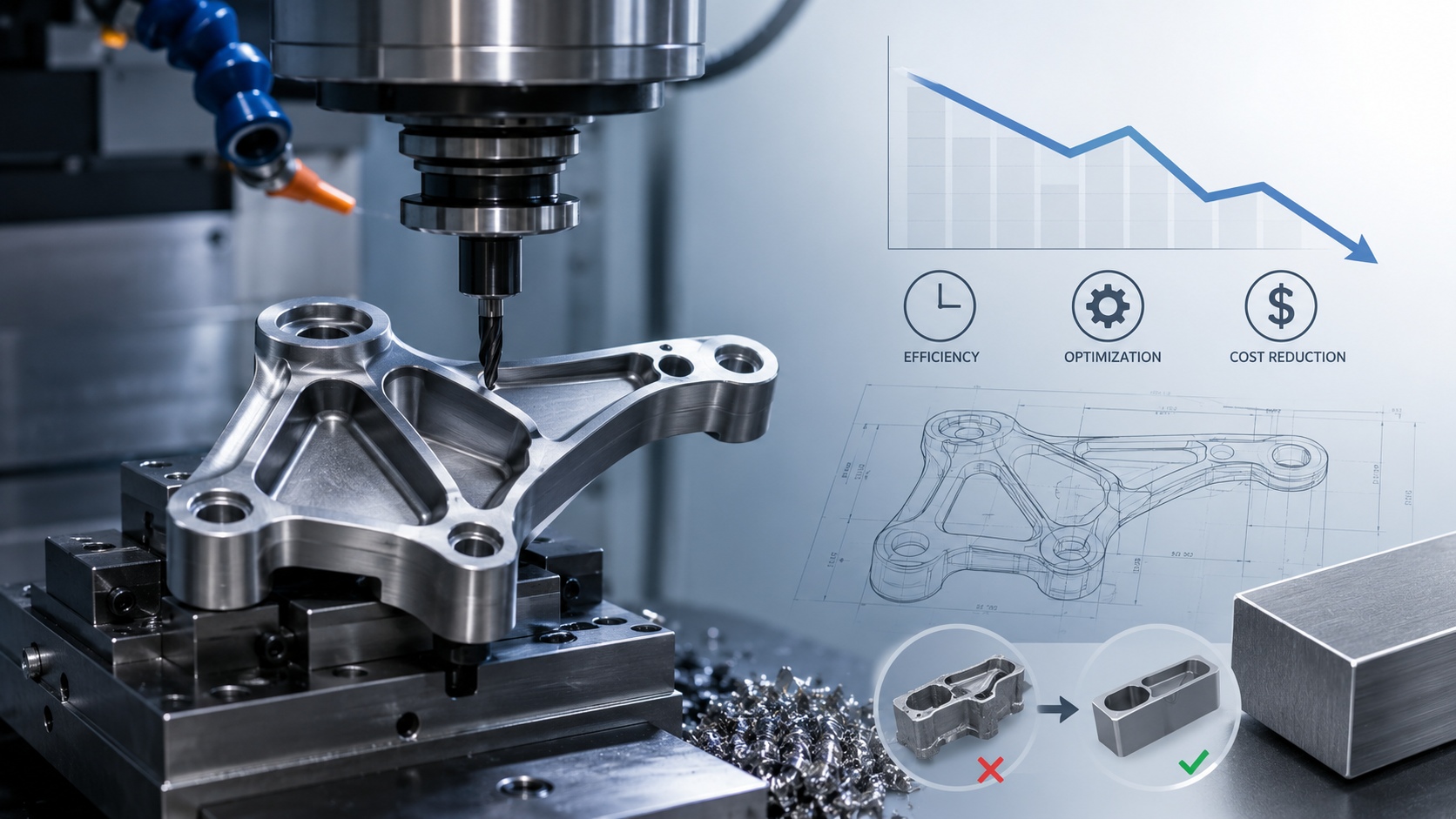
How to Reduce Machining Cost in Titanium Parts
This article explains practical ways to reduce machining cost in titanium parts without compromising functional performance.
Read Article

This article explains practical ways to reduce machining cost in titanium parts without compromising functional performance.
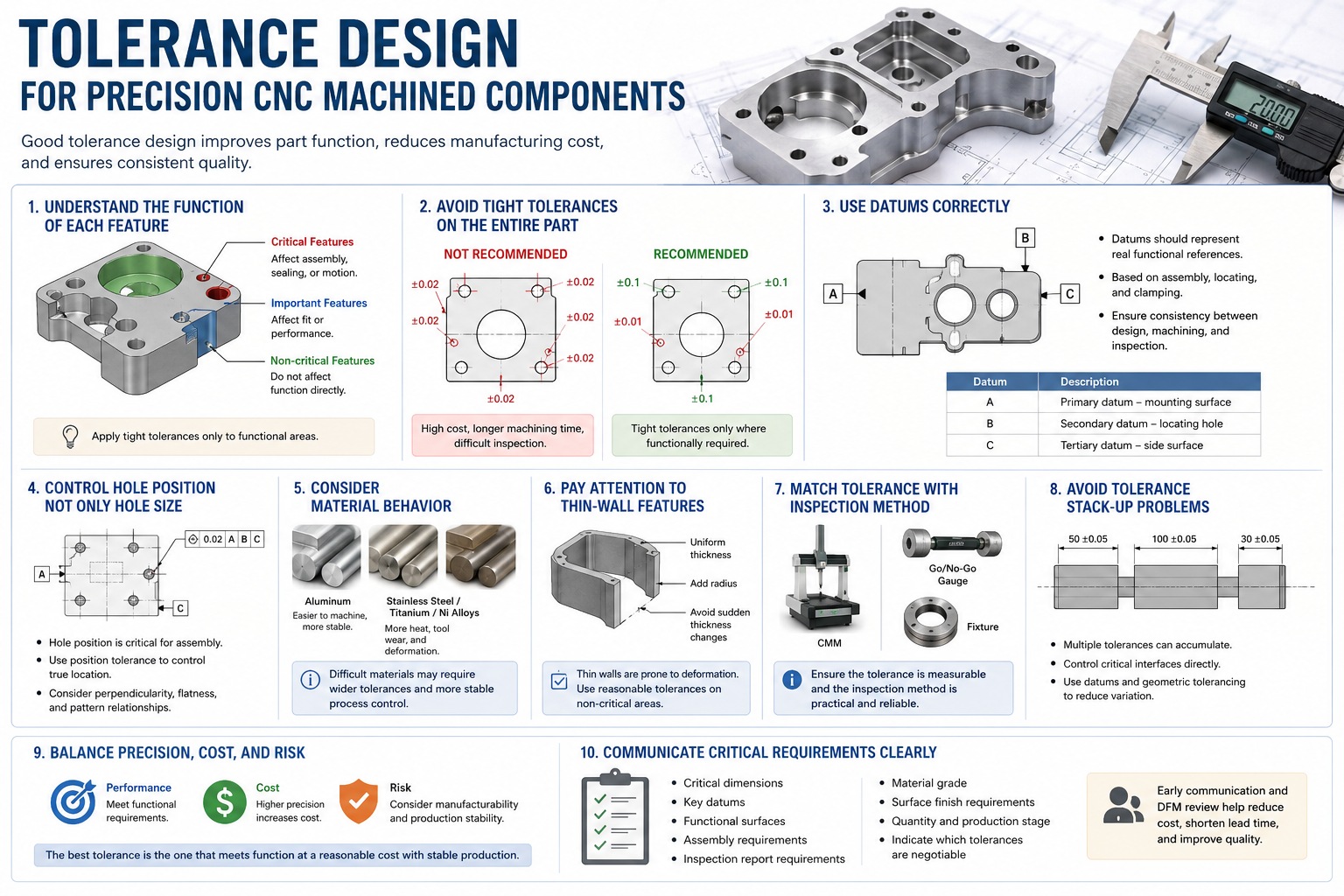
This article explains practical tolerance design principles for precision CNC machined components.
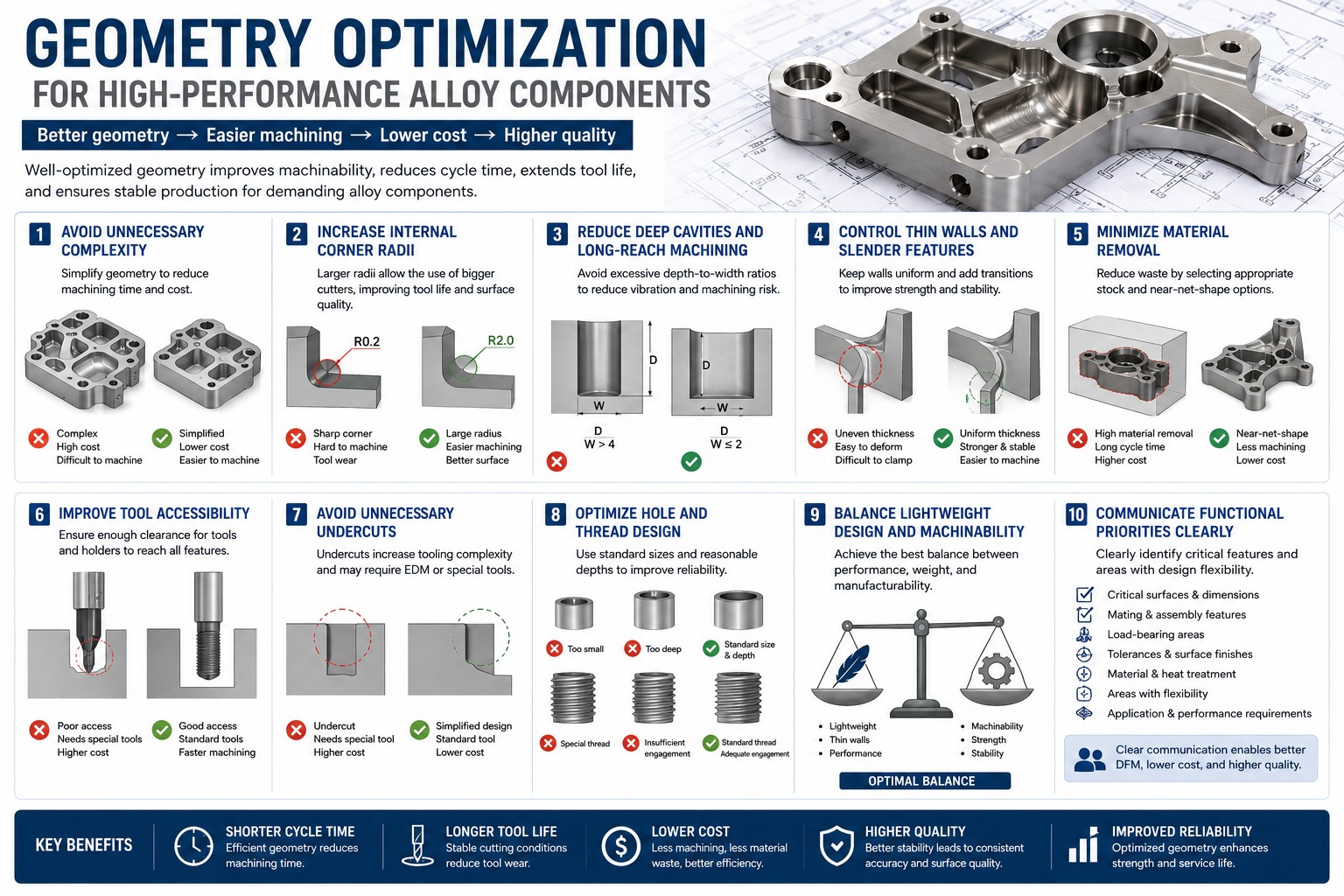
High-performance alloys are used in demanding applications where strength, heat resistance, corrosion resistance, fatigue performance, or weight reduction is critical. Common examples include titanium alloys, nickel-based superalloys, cobalt alloys, tungsten, molybdenum, tantalum, and niobium.
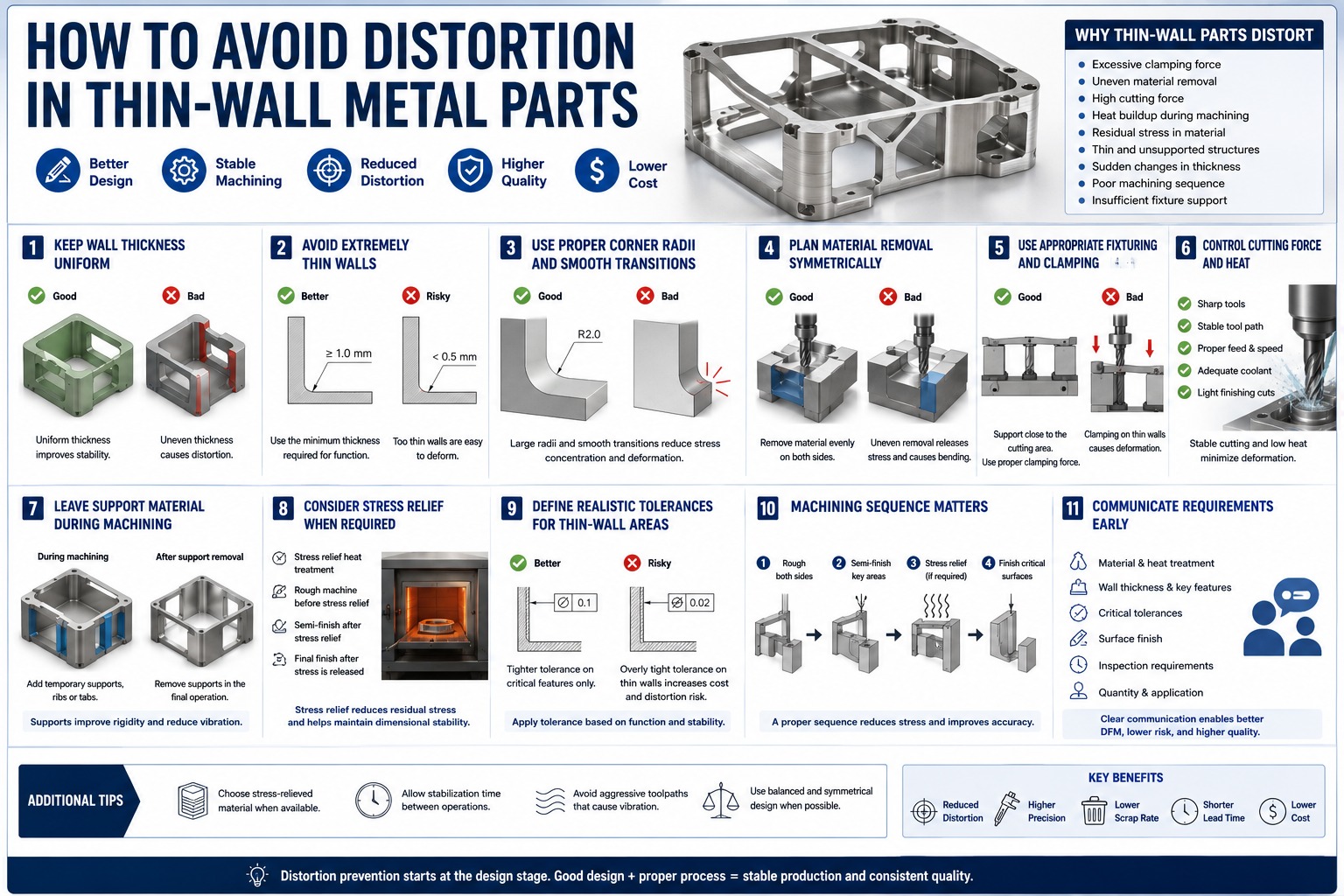
This article explains practical ways to avoid distortion in thin-wall metal parts and improve machining stability.
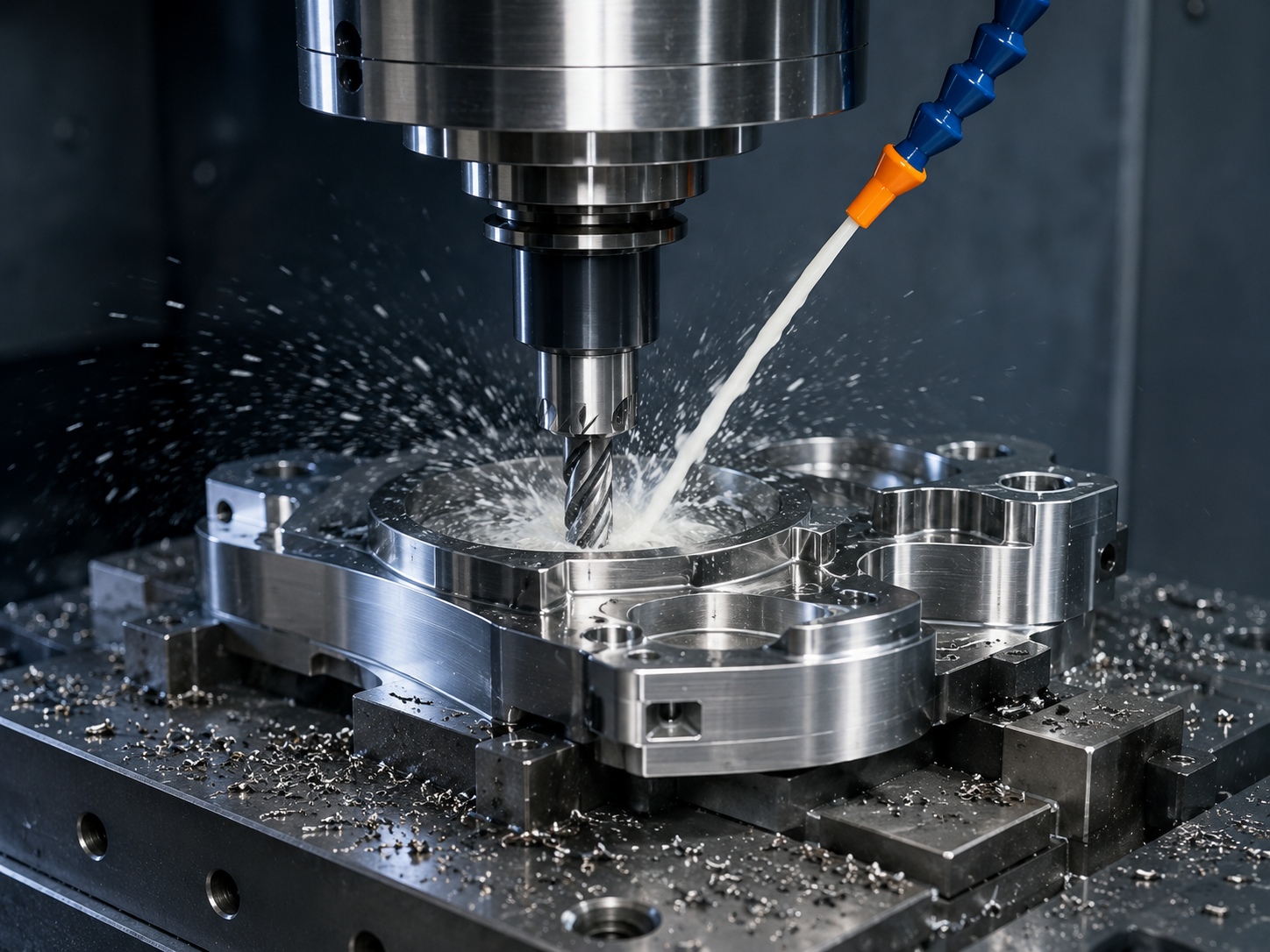
Inconel 718 is one of the most widely used nickel-based superalloys in aerospace, energy, semiconductor, and high-performance industrial applications. It offers excellent strength, corrosion resistance, and oxidation resistance, especially at elevated temperatures.
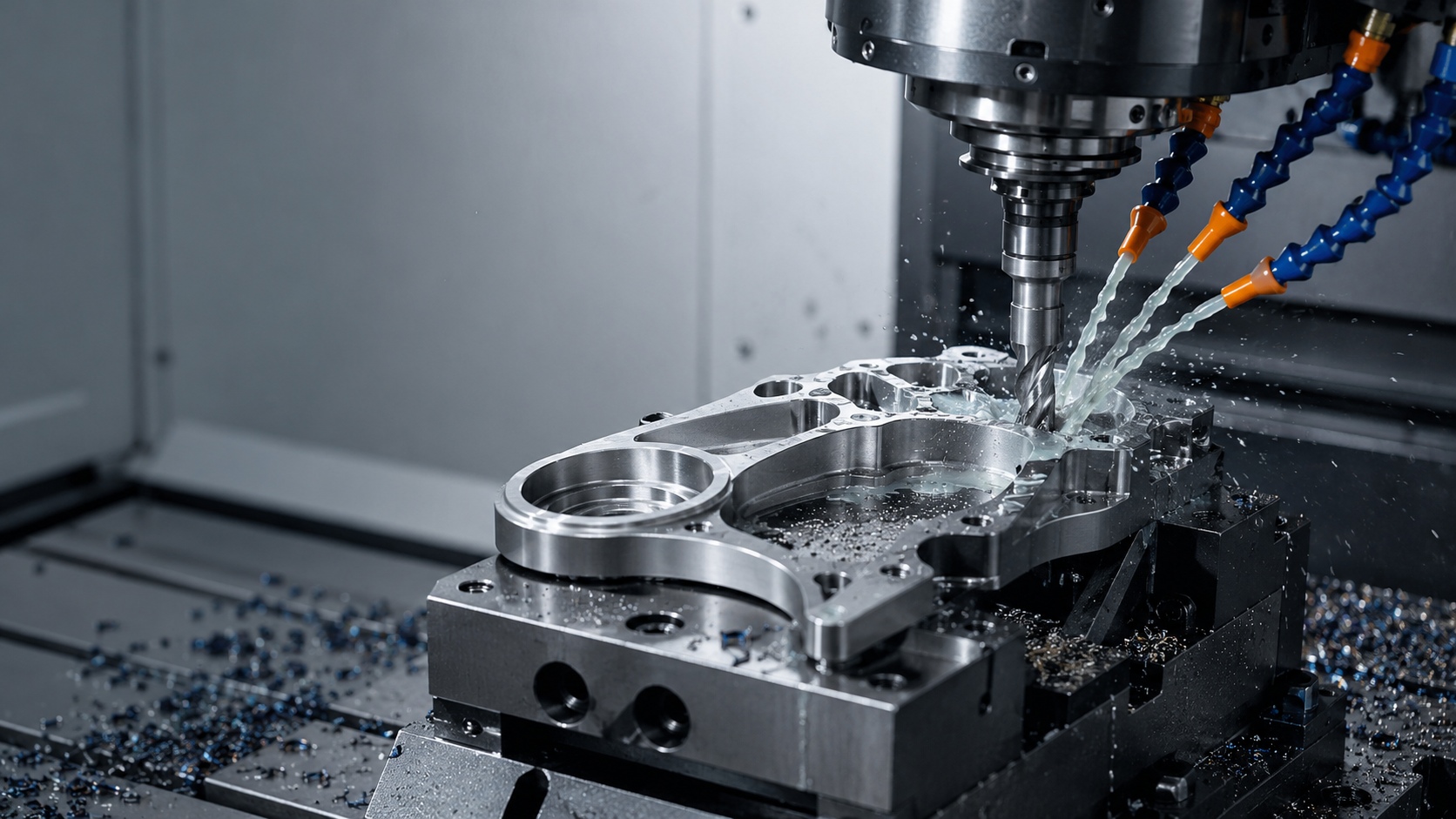
Titanium alloys are widely used in aerospace, medical devices, marine equipment, chemical processing, and high-performance industrial applications. Their excellent strength-to-weight ratio, corrosion resistance, and biocompatibility make them attractive for critical components.
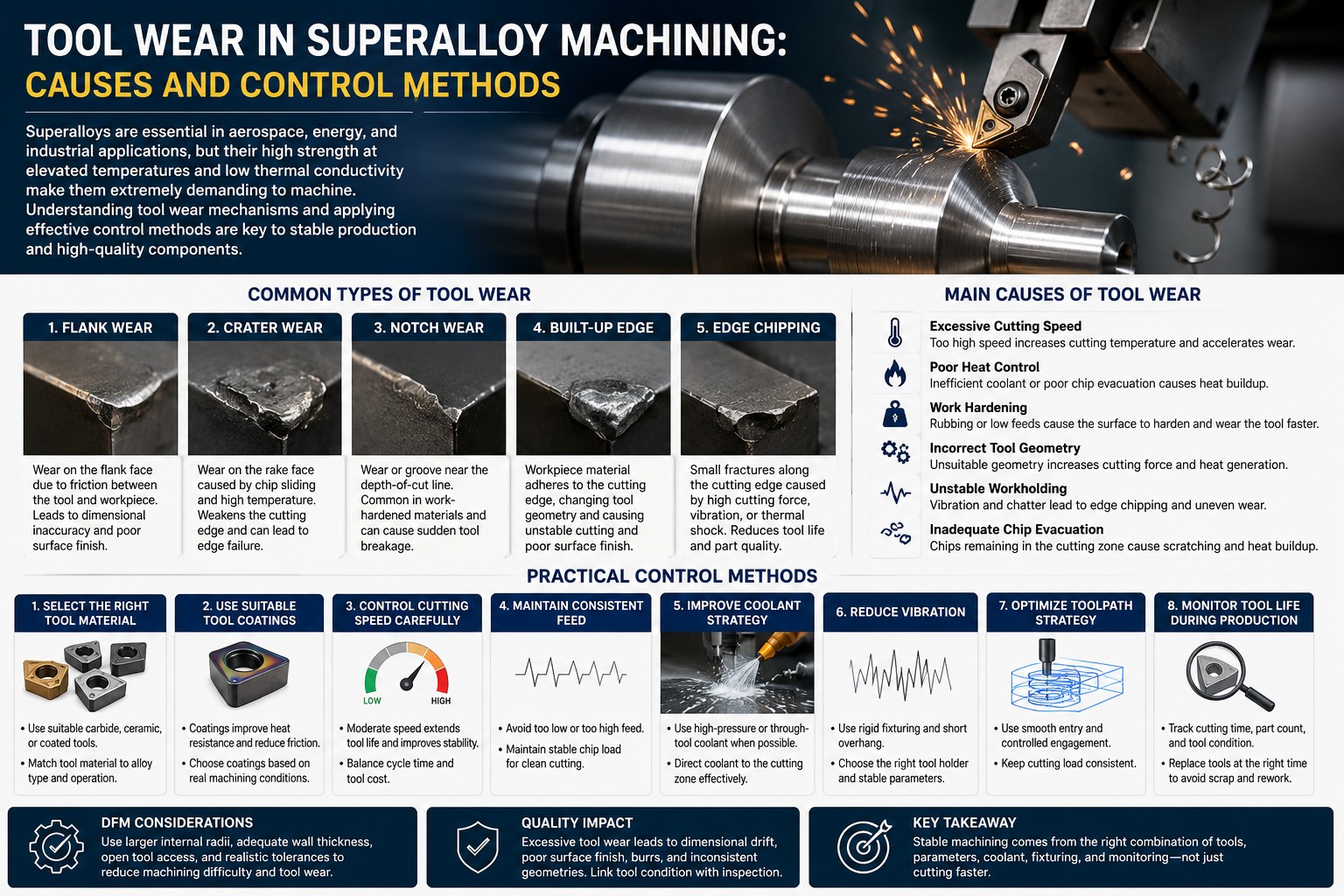
Superalloys such as Inconel, Hastelloy, Waspaloy, and other nickel-based or cobalt-based alloys are widely used in aerospace, energy, chemical processing, marine, and high-temperature industrial applications.
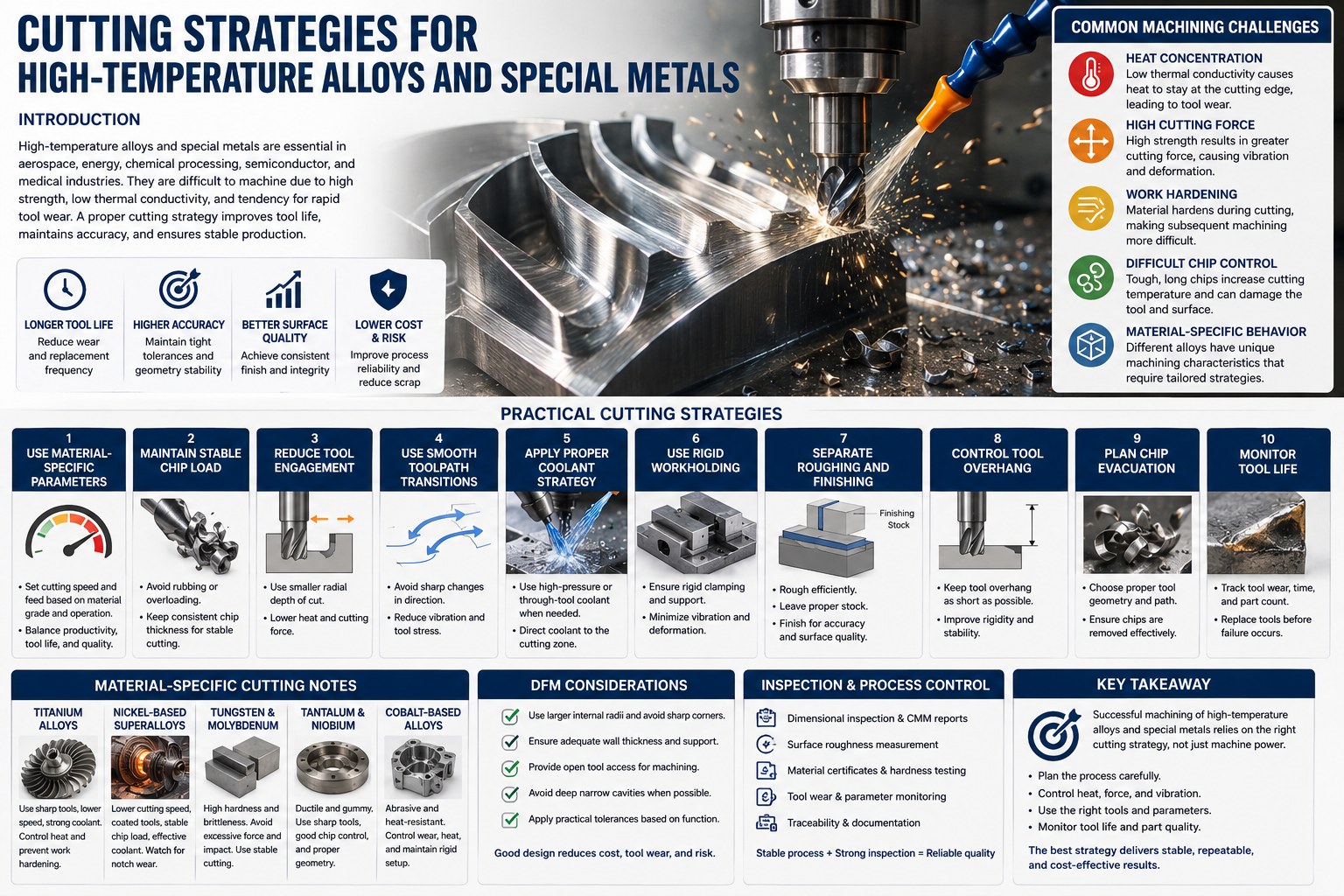
High-temperature alloys and special metals are used in demanding industries such as aerospace, energy, chemical processing, semiconductor equipment, medical devices, and advanced industrial systems.
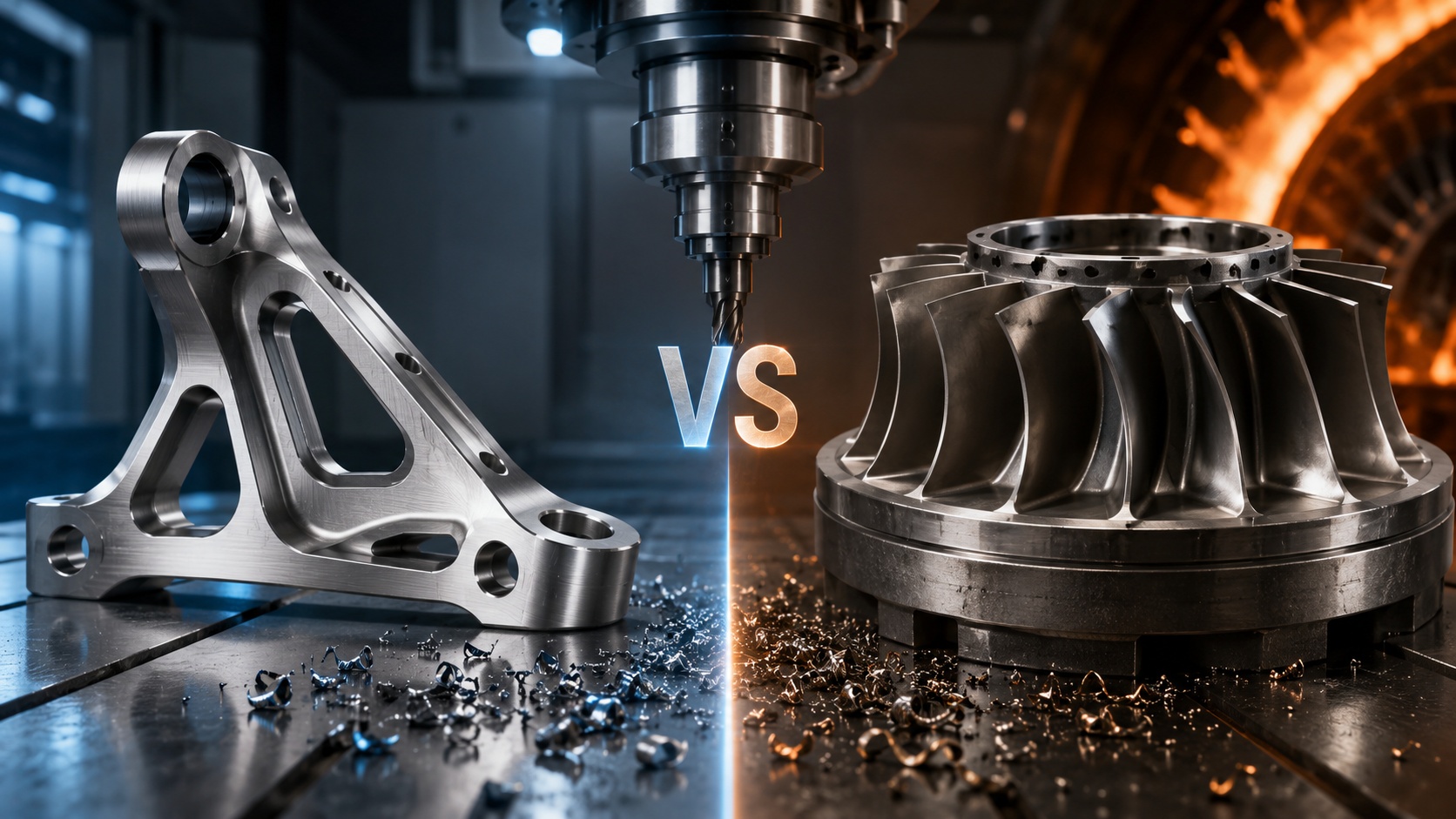
Titanium and Inconel are both high-performance engineering materials used in demanding industries such as aerospace, medical devices, energy, semiconductor equipment, marine systems, and high-temperature assemblies. However, they are selected for very different reasons.