
Introduction
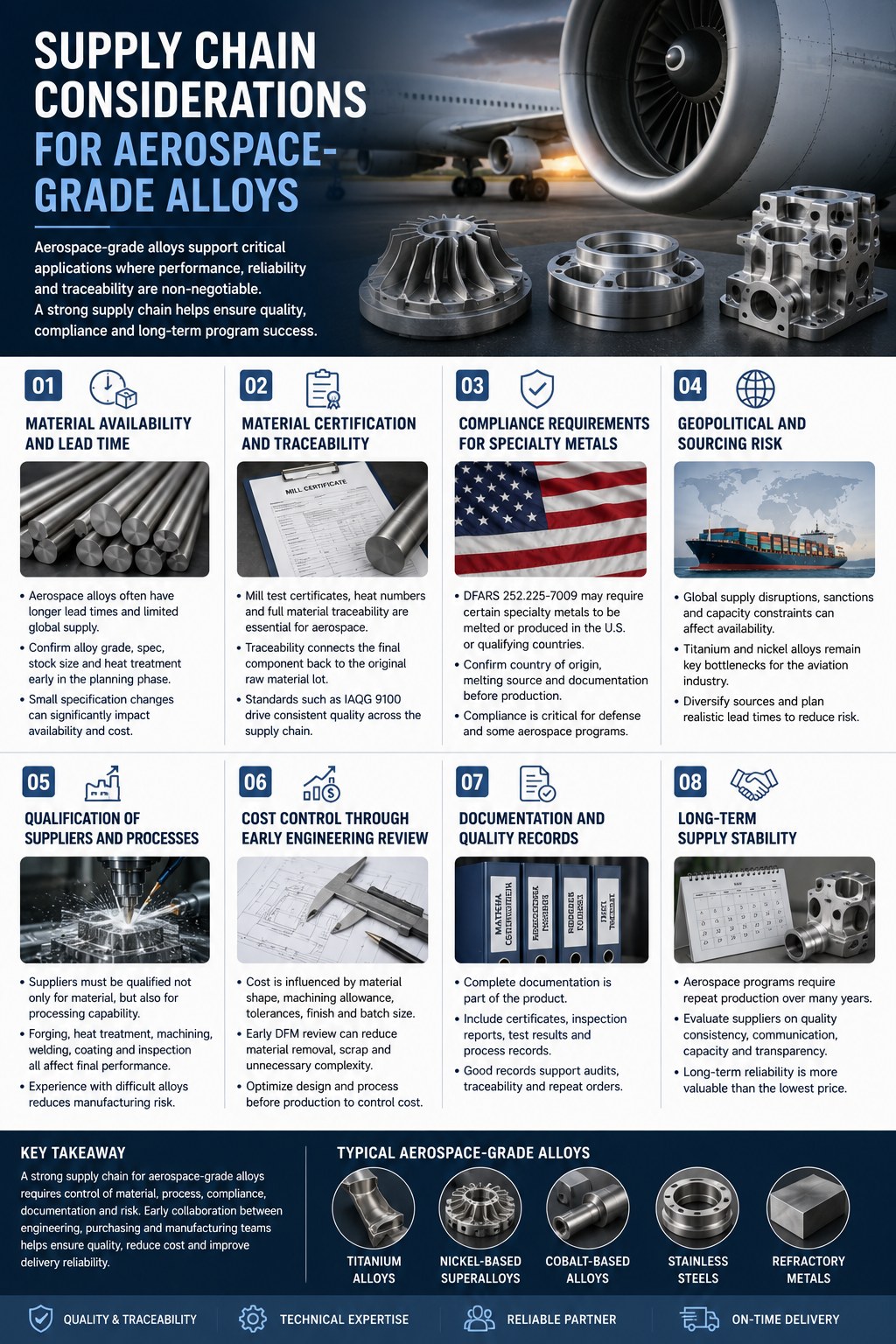
Aerospace-grade alloys are used in applications where material performance, reliability and documentation are critical. Titanium alloys, nickel-based superalloys, cobalt-based alloys, stainless steels, aluminum alloys and refractory metals may all be used in aircraft structures, engine systems, thermal environments, precision assemblies and advanced aerospace equipment.
For these materials, supply chain management is not only about price and delivery time. Buyers must also consider material origin, certification, traceability, processing history, quality documentation, machining capability and long-term repeatability.
In recent years, aerospace supply chains have faced continued pressure from material shortages, long lead times, labor constraints, geopolitical risks and capacity limitations. Titanium and nickel supply have remained important bottlenecks for the aviation sector.
1. Material Availability and Lead Time
Aerospace-grade alloys often have longer lead times than standard industrial materials. Titanium, Inconel, Hastelloy, cobalt alloys, molybdenum, tungsten and tantalum may require special sourcing channels, certified mills or controlled processing routes.
For buyers, early material confirmation is important. Stock size, alloy grade, specification, heat treatment condition and certification requirements should be reviewed before finalizing the production schedule.
A small change in material specification may create a large difference in availability, cost and delivery time.
2. Material Certification and Traceability
Aerospace customers often require complete material documentation. This may include mill test certificates, heat numbers, chemical composition, mechanical properties, heat treatment records and inspection reports.
Traceability is especially important because aerospace components may be used in safety-critical systems. A supplier must be able to connect the final machined component back to the correct raw material batch.
For international aerospace and defense supply chains, quality management standards such as IAQG 9100 are widely used to standardize requirements across suppliers and improve quality, schedule and cost performance.
3. Compliance Requirements for Specialty Metals
Some aerospace and defense projects may involve special sourcing restrictions. For example, DFARS 252.225-7009 requires certain specialty metals incorporated into covered defense contract items to be melted or produced in the United States, its outlying areas or a qualifying country, with defined exceptions.
This means buyers and suppliers must confirm compliance requirements before production starts. The country of origin, melting source, material route and documentation package may directly affect whether a material is acceptable for a specific project.
For commercial aerospace, requirements may vary by customer, part application and contract terms. For defense-related projects, compliance review is even more important.
4. Geopolitical and Sourcing Risk
Aerospace-grade titanium and nickel alloys are affected by global supply chain risks. Geopolitical issues, sanctions, limited qualified suppliers and long qualification cycles can all affect material availability.
Recent aviation supply chain disruptions have shown that critical materials such as titanium and nickel can remain a bottleneck even when demand is strong. In the titanium market, major aircraft manufacturers have also been working to diversify sourcing away from higher-risk supply routes.
For buyers, this means material planning should not depend on only one source. Alternative suppliers, substitute grades and realistic lead time planning should be discussed early.
5. Qualification of Suppliers and Processes
Aerospace-grade alloy sourcing is not only about finding raw material. It also requires qualified processing partners.
Forging, rolling, heat treatment, machining, grinding, EDM, welding, coating and inspection may all affect final part performance. If a supplier lacks experience with the specific material, problems such as distortion, tool wear, surface damage or dimensional instability may occur during production.
For difficult materials such as titanium, Inconel, cobalt alloys, tungsten and molybdenum, supplier selection should include both material sourcing capability and machining process capability.
6. Cost Control Through Early Engineering Review
Aerospace alloys are expensive. Poor material planning can significantly increase cost.
Cost is affected by raw material shape, stock size, machining allowance, scrap rate, tolerance requirements, surface finish, inspection method and batch quantity. In many projects, cost can be reduced before machining begins by reviewing the drawing and selecting a more practical manufacturing route.
Early DFM review can help identify unnecessary tight tolerances, difficult features, excessive material removal and potential distortion risks. This allows buyers to improve manufacturability without reducing functional performance.
7. Documentation and Quality Records
For aerospace-grade components, documentation is part of the product.
A reliable supplier should support clear records such as material certificates, dimensional inspection reports, surface finish data, hardness testing results, process notes and packaging records when required.
Good documentation helps buyers pass internal quality reviews, customer audits and repeat order verification. It also reduces communication risk when parts are used in complex assemblies.
8. Long-Term Supply Stability
Aerospace projects often require repeat production over a long period. Therefore, buyers should consider whether a supplier can support stable quality, stable material sourcing and consistent documentation over time.
A one-time low price is not always the best choice. For aerospace-grade alloys, long-term reliability, communication speed, technical understanding and supply chain transparency may be more valuable than the lowest quotation.
Conclusion
Supply chain management for aerospace-grade alloys requires more than purchasing raw material. It requires control of material availability, certification, traceability, compliance, machining capability, quality documentation and long-term supply stability.
Titanium alloys, nickel-based superalloys, cobalt alloys and refractory metals can deliver excellent performance in aerospace applications, but they must be sourced and processed with discipline.
Nova Special Metals supports precision machining and sourcing coordination for high-performance metal components. We help customers review material options, manufacturability risks, machining strategies and documentation requirements before production begins.
For aerospace-grade alloy components, early communication between engineering, purchasing and manufacturing teams can reduce risk, control cost and improve delivery reliability.