
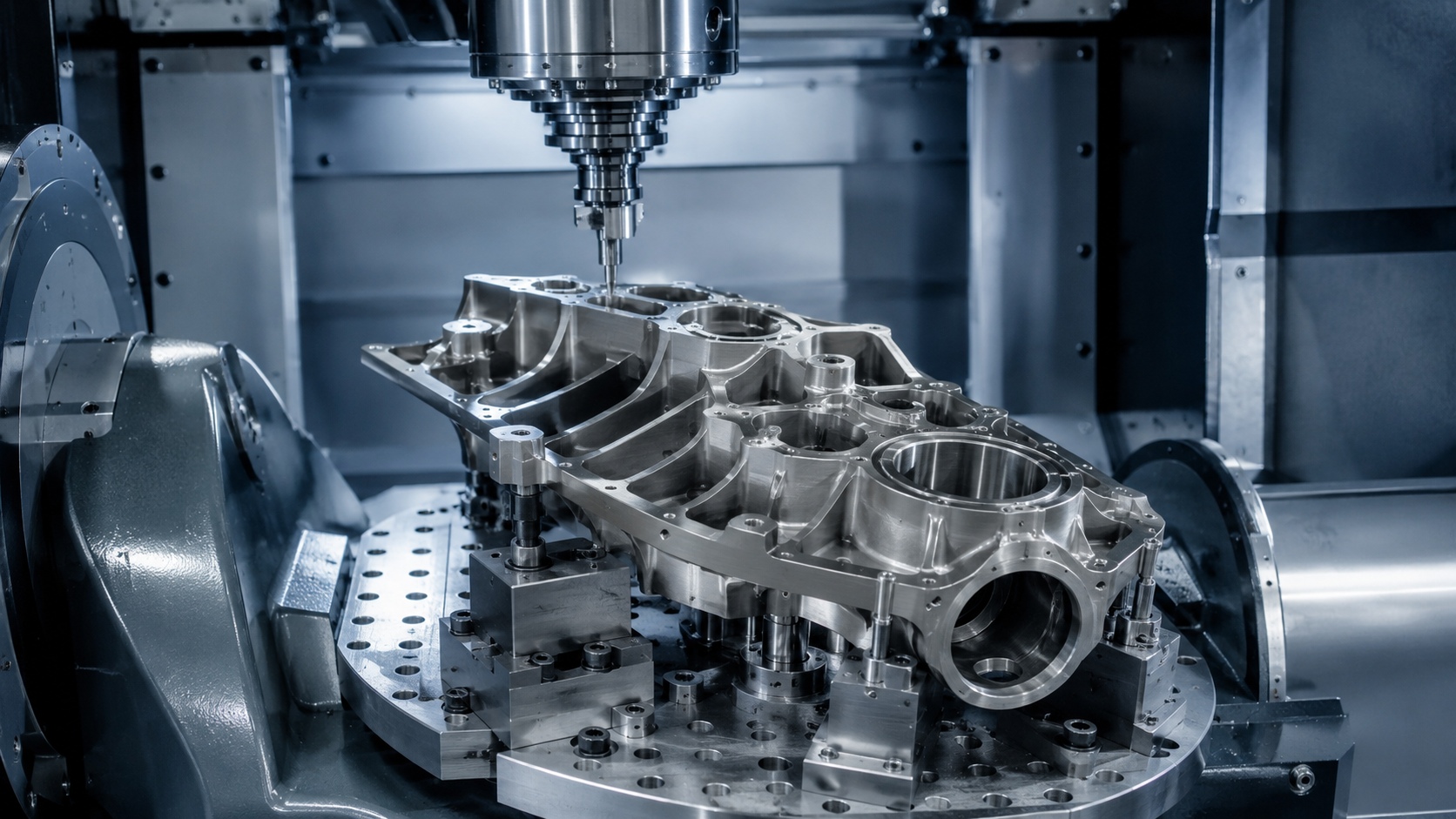
Project Background
A customer in the aerospace sector required precision-machined Inconel 718 components for high-temperature assembly applications. The parts were designed for use in demanding environments where heat resistance, mechanical strength and long-term dimensional stability were critical.
Inconel 718 was selected because of its excellent strength at elevated temperatures, good oxidation resistance and proven performance in aerospace engine and structural applications. However, the material is also well known for being difficult to machine. Its high strength, work-hardening behavior and poor thermal conductivity create significant challenges during CNC machining.
The project required stable machining quality, controlled surface integrity and reliable inspection support. Since the components were intended for aerospace-related assemblies, the customer also required strong process discipline and clear quality documentation.
Engineering Challenge
The main challenge of this project was machining Inconel 718 while maintaining dimensional accuracy and surface consistency. Compared with conventional stainless steel or aluminum, Inconel 718 produces much higher cutting resistance. During machining, heat tends to concentrate around the cutting edge, which can lead to rapid tool wear, poor surface finish and reduced process stability.
Another key concern was work hardening. If cutting parameters were not properly controlled, the material surface could become harder during machining, increasing tool load and making subsequent operations more difficult. This risk was especially important for tolerance-critical features, threaded areas, sealing surfaces and assembly interfaces.
The component geometry also included several complex features that required careful tool path planning. Any unstable machining condition could lead to vibration, tool deflection or inconsistent dimensional results. For aerospace assemblies, even small deviations in key features may affect fit, sealing performance or long-term reliability.
In addition, the customer expected consistent quality control. The machining process had to consider not only final dimensions, but also repeatability, surface condition and inspection traceability.
Nova’s Solution
Nova Special Metals approached the project with a controlled machining strategy designed specifically for nickel-based superalloys. Before production, the drawing was reviewed to identify tolerance-critical areas, high-risk machining features and potential tool access challenges.
The machining process was divided into roughing, semi-finishing and finishing stages. Rough machining was planned to remove material efficiently while avoiding excessive cutting force. Semi-finishing operations helped stabilize the part before final dimension control. Final finishing was reserved for key functional surfaces, allowing better control of tolerance and surface quality.
Tooling selection was an important part of the process. Suitable carbide tooling, rigid tool holding and optimized cutting parameters were used to reduce heat buildup and improve tool life. Cutting speed, feed rate and depth of cut were carefully balanced to avoid work hardening and reduce the risk of tool failure.
For complex features, tool paths were optimized to maintain stable engagement and reduce vibration. Where necessary, additional attention was given to coolant strategy, chip evacuation and machining sequence. This helped protect the cutting edge and maintain consistency across multiple operations.
Quality control was integrated into the process. Critical dimensions were checked during production, and final inspection was performed according to the customer’s drawing requirements. Inspection records and material-related documentation were managed to support customer review and project traceability.
Achievement
Through controlled machining strategy and careful process planning, the Inconel 718 components were produced with stable dimensional accuracy and reliable surface quality.
Key results included:
- Improved machining stability for Inconel 718 components
- Reduced tool wear risk through optimized cutting strategy
- Better control of work-hardening during machining
- Consistent tolerance control on functional surfaces
- Reliable inspection support for aerospace assembly requirements
The project demonstrated Nova’s ability to support high-temperature alloy machining programs where material behavior, tooling strategy and quality control must work together.
Related Capability
Nova Special Metals provides precision machining support for Inconel 718, Inconel 625, Hastelloy, titanium, tungsten, molybdenum, tantalum and other high-performance materials.
For aerospace, energy, semiconductor and advanced industrial applications, Nova can support customers with DFM review, process planning, CNC machining, inspection coordination and quality documentation for difficult-to-machine metal components.