Project Background
A customer required precision-machined thin-wall titanium components for a lightweight structural assembly. The parts were designed to reduce overall system weight while maintaining mechanical strength, dimensional accuracy and reliable assembly performance.
Titanium alloy was selected because of its high strength-to-weight ratio, corrosion resistance and suitability for advanced industrial and aerospace-related applications. However, the component geometry included thin walls, open pockets, deep cavities and several tolerance-critical mounting features. These characteristics made the part highly sensitive to machining stress and deformation.
The project required more than standard CNC machining. It needed careful process planning, stable fixturing, controlled material removal and inspection support throughout production.
Engineering Challenge
Thin-wall titanium components are challenging because the material itself is difficult to cut, while the part structure becomes less rigid as machining progresses. As material is removed, internal stress can be released unevenly, causing the component to bend, twist or lose dimensional stability.
For this project, the main challenge was controlling distortion while maintaining tight tolerance requirements. The thin-wall areas could not withstand excessive cutting force, and unstable clamping could easily deform the part before machining even began.
Titanium’s low thermal conductivity also increased the difficulty. Heat generated during cutting tends to remain near the cutting zone, which may accelerate tool wear and affect surface quality. If cutting parameters are too aggressive, the combination of heat, cutting force and low part rigidity can lead to dimensional variation.
Another key challenge was machining sequence. If the part was finished too early in one area while other sections still required heavy material removal, the final geometry could shift after stress redistribution. Therefore, the process had to be designed to gradually balance material removal and maintain part stability until final inspection.
Nova’s Solution
Nova Special Metals supported the project with a distortion-control machining strategy. Before production, the drawing was reviewed to identify thin-wall sections, high-risk deformation areas, datum features and final inspection requirements.
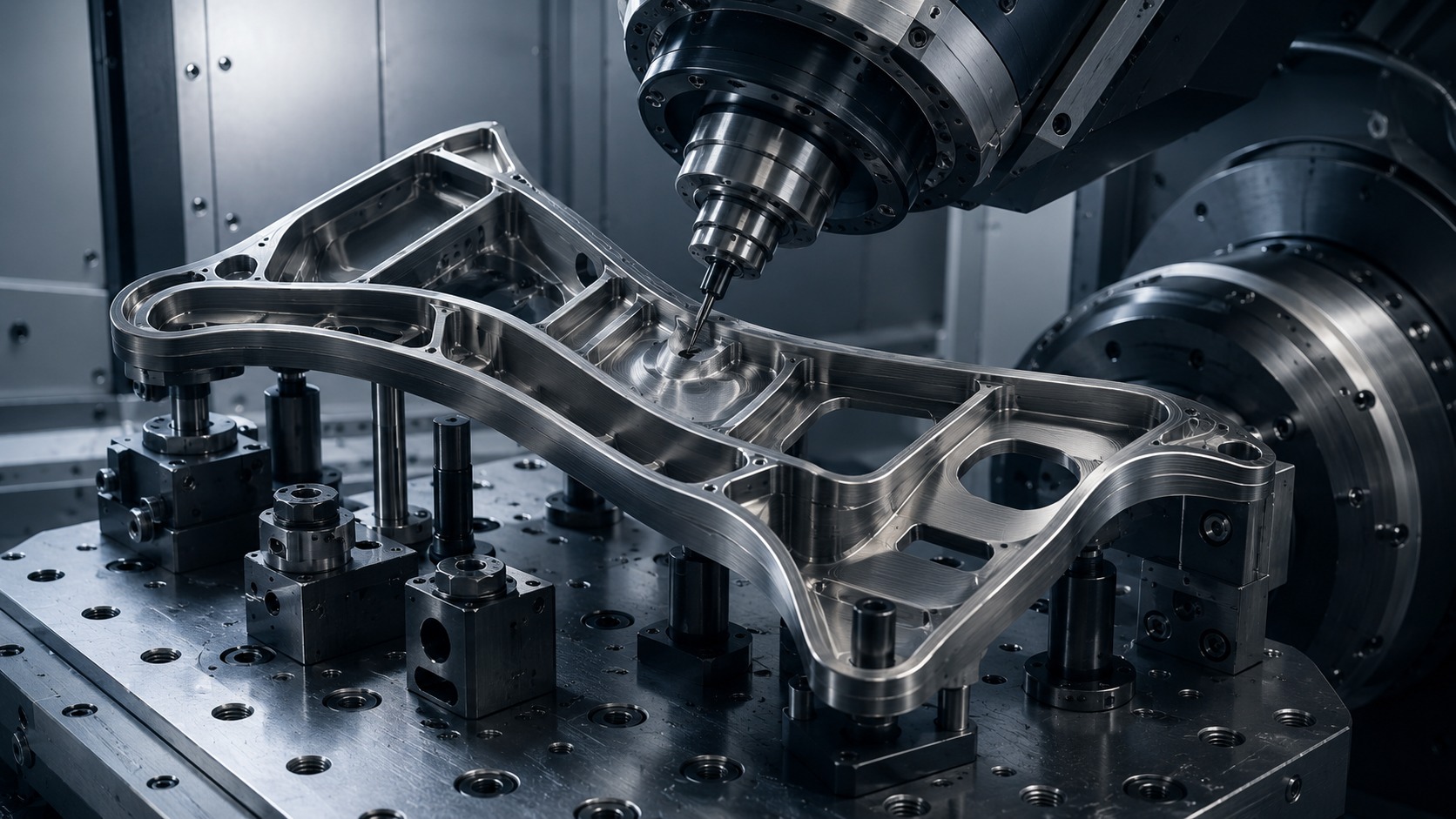
A staged machining process was used. Rough machining removed material gradually rather than aggressively, helping reduce sudden stress release. Semi-finishing operations were planned to leave controlled machining allowance on critical surfaces. Final finishing was performed only after the part reached a more stable condition.
Fixturing was also carefully considered. The clamping method was designed to support the part without creating excessive local pressure. For thin-wall areas, additional support was used where necessary to reduce vibration and prevent movement during machining.
Tool path planning was optimized to reduce cutting force. Balanced material removal, suitable cutting depth, stable tool engagement and appropriate feed control were applied to protect thin sections. Sharp tools and stable tool holders were selected to improve cutting performance and reduce heat buildup.
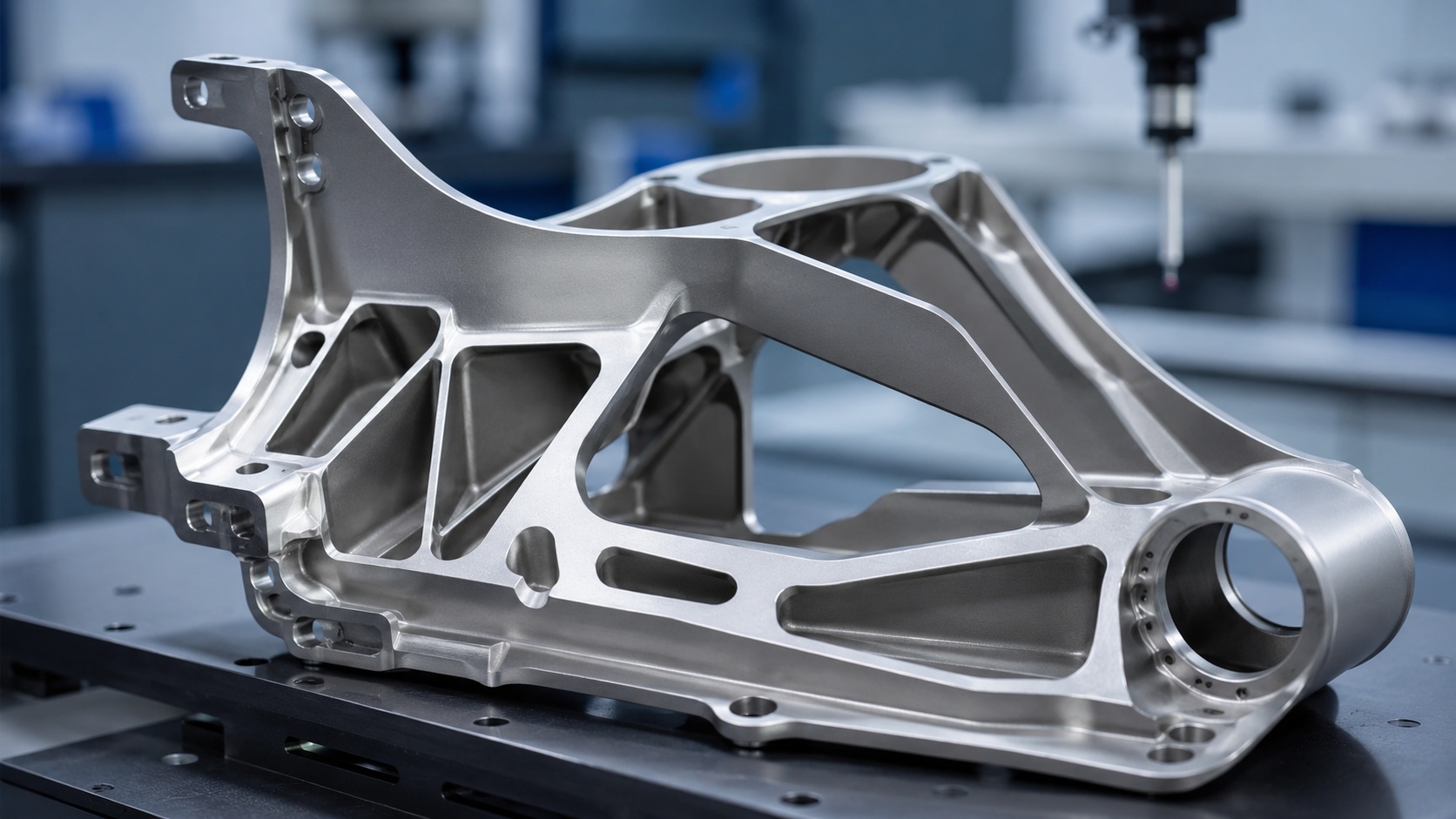
Intermediate inspection was included during production to monitor dimensional movement before final machining. This allowed the machining team to identify potential distortion early and adjust the finishing strategy when needed. Final inspection focused on critical dimensions, flatness, wall thickness and assembly-related features.
Achievement
Through controlled machining sequence, stable fixturing and careful process monitoring, the thin-wall titanium parts were produced with improved dimensional stability and reduced deformation risk.
Key results included:
- Reduced distortion in thin-wall titanium structures
- Improved control of flatness and critical dimensions
- Stable machining of open pockets and lightweight features
- Better surface consistency on functional areas
- Reliable inspection support for customer quality review
The project demonstrated Nova’s ability to manage titanium machining programs where part geometry, material behavior and process control directly affect final quality.
Related Capability
Nova Special Metals provides precision machining support for titanium and other difficult-to-machine materials used in aerospace, medical, semiconductor, energy and advanced industrial applications.
For projects involving thin-wall structures, lightweight designs, complex pockets, tight tolerances or deformation-sensitive components, Nova can assist with DFM review, fixturing strategy, staged machining, distortion control and quality inspection support.